NSFW will be tagged as #lemon sorta NSFW is #Lime Weird fet shit/ extreme NSFW is #orange reblog to spread awareness that we’re back on the citrus scale
We’ve been working on something special and are so excited to announce that we’re partnering with Tumblr to bring the best of Black excellence straight to your dashboard. How is this February different from the usual BHM celebrations? This time around, we won’t stop on the last day of February. We and Tumblr are committed to shining a light on the Black community throughout this entire year. This is #BlackExcellence365.
Our goal for #BlackExcellence365 is to the showcase the importance of diversity in Black history, present, and future. The Black community is not monolithic. It is a pan-African community, one consisting of a myriad of ethnic identities from African-American, African, Caribbean, Latinx, etc. Blackness encompasses different religions, sexual and gender identities, socioeconomic statuses, and more. Celebrating these identities and their successes is what #BlackExcellence365 is all about. We’ll be doing this by showcasing the continuous achievements of and contributions by Black people in history, science, music, art, media, social impact, fashion, gaming, poetry, and so many other areas of prominent cultural and historical importance.
Here’s a peek at just some of the things you can expect to see from @action (unless otherwise indicated!), Tumblr’s official blog for social impact:
February
2/4 — Artist Spotlight: Artist Jessica Spence – @jessmyart
2/25 — Artist Spotlight: Artist and Filmmaker Asaph Luccas – @asaphluccas
March
#BlackExcellence365 video series, a round-table discussion of important issues in the Black community. March’s theme is Black Girl Magic: The Importance of Black Women’s Work in the Media.
June
#BlackExcellence365 video series X #TheBlackout: Content & Conversations Surrounding the Black LGBTQ+ community
August
#BlackExcellence365 video series X #TheBlackout: Music in the Black Community
December
#BlackExcellence365 video series X #TheBlackout: Mental Health in Communities of Color
Are you ready? We’re ready. Stay tuned to @action – Tumblr’s official blog for social impact, for the latest news, features, and community highlights. ✊🏿✊🏾✊🏽
Added the cursive and colored text features that are on mobile to the PC version of Tumblr
GET. RID. OF. FUCKING. PORN BOTS.
Start actually fucking answering people’s support/help emails with real fucking people and not automated unhelpful bullshit
Make it so when an OP is deleted, so are all the reblogs
Make it so when an OP is edited, so are all the reblogs
Make it is blocked people’s posts don’t show up on your dash when people you follow reblog them
FIX THE BROKEN ASS FUCKING TAGS
STOP PUNISHING ADULT ARTISTS/ETC BC GOD FORBID AN UNDERAGE USER WHO SHOULDN’T BE ABLE TO GET AN ACCOUNT ON THIS SITE SEES A FEMALE NIPPLE
Give us the option to personally customize the color scheme of Tumblr
Stop mass flagging shit that iSN’T FUCKING PORN
Give us the ability to make group chats
Make posts stop fucking breaking bc god forbid there’s an outgoing link in the post
Let us make our blogs hidden from Google search results without blacklisting our posts from any tags we post in/blocking us from searching things on our own fucking blogs
I personally don’t mind the dark and neon theme, though it is a little too bright. I feel bad for everyone who’s eyes are worse than mine and having a hard time right now. I recommend lowering your screen’s brightness to see if that helps. Email the shit out of Tumblr Support and request they change the theme back maybe (though their emailing system sucks dick so that might not do much).
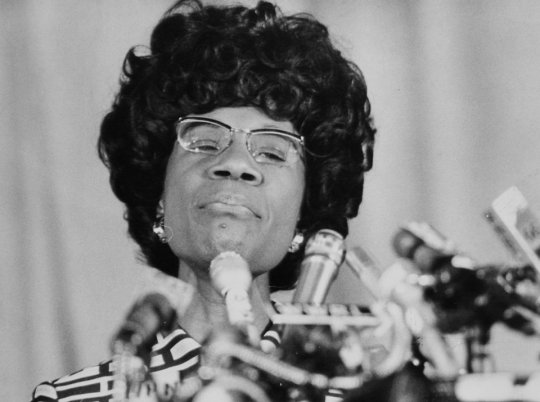
Chisolm broke major barriers when she became the first black congresswoman in 1968. She continued on her political track when she ran for president four years later, making her the first major party black candidate to run.
2. Claudette Colvin (1939-present)
Several months before Rosa Parks’ refusal to give up her seat on a bus, Colvin was the first person arrested for resisting bus segregation in Montgomery, Alabama, at the age of 15. She also served as one of four plaintiffs in the case of Browder v. Gayle, which ruled that Montgomery’s segregated bus system was unconstitutional.
3. Septima Poinsette Clark (1898–1987)
Clark was an educator and civil rights activist who established citizenship schools that helped many African Americans register to vote. Regarded as a pioneer in grassroots citizenship education, she was active with the NAACP in getting more black teachers hired in the South.
4. Mary Church Terrell (1863–1954)
This women’s suffrage activist and journalist was the first president of the National Association of Colored Women and a charter member of the NAACP. She was also one of the first African-American women to be awarded a college degree.
5. Angela Davis (1944-present)
Davis is a revolutionary American educator. The former Black Panther has fought for race, class and gender equality over the years. Davis authored one of the of the most distinguished books in the field of women’s studies called Women, Race & Class. She’s also an advocate of prison reform.
6. Ida B. Wells-Barnett (1862-1931)
Wells helped bring international attention to the horrors of lynching in the South with her investigative journalism. She was also elected as the Secretary of the Colored Press Association in 1889.
7.Kathleen Cleaver (1945-present)
Kathleen Cleaver is one of the central figures in Black Panther history. She was the first communications secretary for the organization and is currently a law professor at Emory University. She also helped found the Human Rights Research Fund.
8. Dr. Dorothy Height (1912-2010)
Dr. Height was regarded by President Barack Obama as “the godmother of the Civil Rights Movement.” She served as the president of the National Council of Negro Women for over two decades and was instrumental in the integration of all YWCA centers in 1946.
9. Phillis Wheatley (1753-1784)
Wheatley was a former slave who was kidnapped from West Africa and brought to America. She was bought by a Boston family and became their personal servant. With the aid of the family, she learned to read and eventually became one of the first women to publish a book of poetry in 1773.
10. Audre Lorde (1934-1992)
This Caribbean-American writer and activist was a self-described “black, lesbian, mother, warrior and poet.” She empowered her readers with her moving poetry often tackling the injustices of racism, sexism and homophobia. She’s known for her poetry and memoirs such as, From a Land Where Other People Live, The Black Unicorn and A Burst of Light.
11. Flo Kennedy (1916-2000)
Kennedy was a founding member of the National Organization of Women and one of the first black female lawyers to graduate from Columbia Law School. She helped found the Feminist Party in 1971, which later nominated Representative Shirley Chisholm for president.
12. Marsha P. Johnson (1945-1992)
Johnson was an outspoken and fearless trans woman who played a vital part in the fight for civil rights for the LGBT community in New York. She was known as the patron at Stonewall Inn who initiated resistance on the night the police raided the bar.
13. Sojourner Truth (1797-1883)
Born Isabella Baumfree, she escaped slavery with her infant daughter and changed her name to Sojourner Truth. She’s best known for her speech delivered at the Ohio Women’s Rights Convention in 1851 titled “Ain’t I A Woman?”
14. Fannie Lou Hamer (1917-1977)
Hamer was a civil rights activist and organizer of the Student Nonviolent Coordinating Committee Fannie Lou Hamer. She helped blacks register to vote and co-founded the Mississippi Freedom Democratic Party.
15. Dr. Mary McLeod Bethune (1875-1955)
Dr. Bethune was an educator and civil rights activist who believed education was the key to racial advancement. She served as the president of the National Association of Colored Women and founded the National Council of Negro Women. She was also the president and founder of Bethune-Cookman College in Florida.
16. Gwendolyn Brooks (1917-2000)
This poet was the first African American to win a Pulitzer Prize for her 1949 book titled Annie Allen.
17. Bessie Coleman (1892-1926)
Coleman became the first black woman to earn a pilot’s license and the first black woman to stage a public flight in the United States. She specialized in stunt flying and parachuting and remains a pioneer for women in aviation.
18. Lena Horne (1917-2010)
Horne was a popular actress and singer who was most known for her performances in the films “Stormy Weather” and “The Wiz.” She worked closely with civil rights groups and refused to play roles that stereotyped black women.
19. Wilma Rudolph (1940-1994)
Nicknamed “the black gazelle,” Rudolph was born premature and was stricken with polio as a child. Though her doctor said she would never be able to walk without her brace, she went on to become a track star. She became the first American woman to win three gold medals at a single Olympics in 1960.
20. Billie Holiday (1915-1959)
Holiday was an extremely influential jazz vocalist who was known for her “distinctive phrasing and expressive, sometimes melancholy voice.” Two of her most famous songs are “God Bless the Child” and “Strange Fruit,” a heart-wrenching ballad about blacks being lynched in the South.
21. Diane Nash (1938-present)
Nash is a founding member of the Student Nonviolent Coordinating Committee. She was instrumental in organizing the Freedom Rides, which helped desegregate interstate buses in the South. She also planned the Selma Voting Rights Movement in response to the Birmingham 16th Street Church bombing that killed four young girls.
22. Zora Neale Hurston (1891-1960)
Hurston was an anthropologist and author of the Harlem Renaissance. Though she didn’t receive much recognition for her work while she was alive, her works of fiction, especially Their Eyes Were Watching God, became staples in American literature.
23. Hattie McDaniel (1893-1952)
As an actress, McDaniel appeared in more than 300 films and was the first African American to win an Oscar in 1940. She was also the star of the CBS Radio program, “The Beulah Show.”
24. Ruby Bridges (1954-present)
Ruby Bridges was six years old when she became the first black child to integrate an all-white school in the South. She was escorted to class by her mother and U.S. marshals due to violent mobs outside of the Louisiana school.
25. Charlayne Hunter-Gault (1942-present)
Hunter-Gault was the first black woman to enroll at the University of Georgia. She became an award-winning journalist after she graduated and worked for outlets such as the New York Times, PBS and NPR.
26. Daisy Bates (1914-1999)
As a civil rights activist and journalist, Bates documented the fight to end segregation in Arkansas. Along with her husband, she ran a weekly black newspaper and became the president of the Arkansas chapter of the NAACP.
27. Dr. Mae Jemison (1956-present)
Dr. Jemison is the first black woman to be admitted into the astronaut training program and fly into space in 1987. Jemison also developed and participated in research projects on the Hepatitis B vaccine and rabies.
28. Ella Baker (1903-1986)
Baker was the national director for the NAACP. She also worked with the Southern Christian Leadership Conference and the Student Nonviolent Coordinating Committee. As one of the leading figures in the civil rights movement, Baker is known for her leadership style which helped develop others’ skills to become leaders in the fight for a better future.
29. Katherine Johnson (1918-present)
Katherine Johnson overcame the prejudices thrown at her while working as a “human computer” at NASA to calculate the numbers that successfully launched the first Americans into space. Johnson’s work helped mark a turning point in the United State’s race to space with the Soviet Union. Johnson’s untold story has recently been popularized through the critically acclaimed film “Hidden Figures.”
30. Madam C.J. Walker (1867-1919)
Madam C.J. Walker became one of the first female self-made millionaires in the world when she inventing a line of hair care products specially for African Americans in 1905. She traveled around the country to promote her products and give hair care demonstrations. She eventually founded Madame C.J. Walker Laboratories to manufacture cosmetics and train beauticians.
31. Josephine Baker (1906-1975)
After getting her start in New York, Josephine Baker found fame and fortune when she moved to France in the 1920s and became one of Europe’s most beloved performers, entrancing her audiences with her enticing dance moves and vocals. During World War II, she worked for the French Resistance, smuggling messages hidden in her sheet music and underwear. Baker frequently returned to the United States to join the Civil Rights Movement efforts. She was even a speaker at the 1963 March on Washington.
32. Linda Martell (1941-present)
Linda Martell was the first black woman to appear on the Grand Ole Opry. The country and blues singer went on to make 11 more appearances on the international radio program throughout her career and she landed a Top 25 song with her 1969 single “Color Him Father.”
33. Mahalia Jackson (1911-1972)
Mahalia Jackson, the Queen of Gospel, is one known as one of the greatest musicians in American history. Jackson sang at the 1963 March on Washington right before Martin Luther King, Jr. gave his “I Have A Dream” speech. While giving his speech, Jackson interjected with “Tell them about the dream, Martin.” Jackson’s words led King to improvise the pivotal latter part of his speech.
34. Dominique Dawes (1976-present)
Dominique Dawes became the first African American to win an individual Olympic medal in women’s gymnastics for her floor performance at the 1996 games in Atlanta. Dawes also won a gold medal with the U.S. women’s gymnastics team. She participated in the 1992, 1996 and 2000 Olympics before she retired.
35. Dr. Patricia Bath (1942-present)
Patricia Bath, Ph.D., is the first black female doctor to receive a medical patent and the first African American woman to complete a residency in ophthalmology at NYU. In 1986, she created the Laserphaco Probe, a tool used to treat patients with cataracts with more precision and less pain. Bath was able to help restore the sight of people who had loss their eyesight for more than 30 years.
Human hand warmers are NOT safe for use around reptiles. They heat unevenly and their temps can spike to 180-200F.
This is what you want to use for heating in a power-outage emergency:
They’re affordable and can be ordered in bulk from herp supply and shipping supply companies. You still have to be SMART with them but they won’t cook your reptile like hot hands will.
Mickey and Minnie speak to deaf child using sign language.
I’m learning sign language so I understand this! They said “Nice to meet you” and then Minnie said “You know I love you” Ahhh I live for these kind of moments!
bitch i’m crying
This is sweet!😍😍😍
😩😩😩😩
I learned from a post that shows Captain America signing with a deaf guest before having a photo taken, everyone who works for Disney knows sign language so they can give deaf guests a wonderful experience as well. It’s just so heartwarming to see.
That’s really so amazing!!!!! ASL should be required learning tbh who wouldn’t like to be able to have a full-blown argument in a library using yr hands
Considering how easy it is to teach babies and young children ASL, there’s no reason why people shouldn’t.





 The NewDugWood Daily Titbit